Project Update: Strategy Adopted
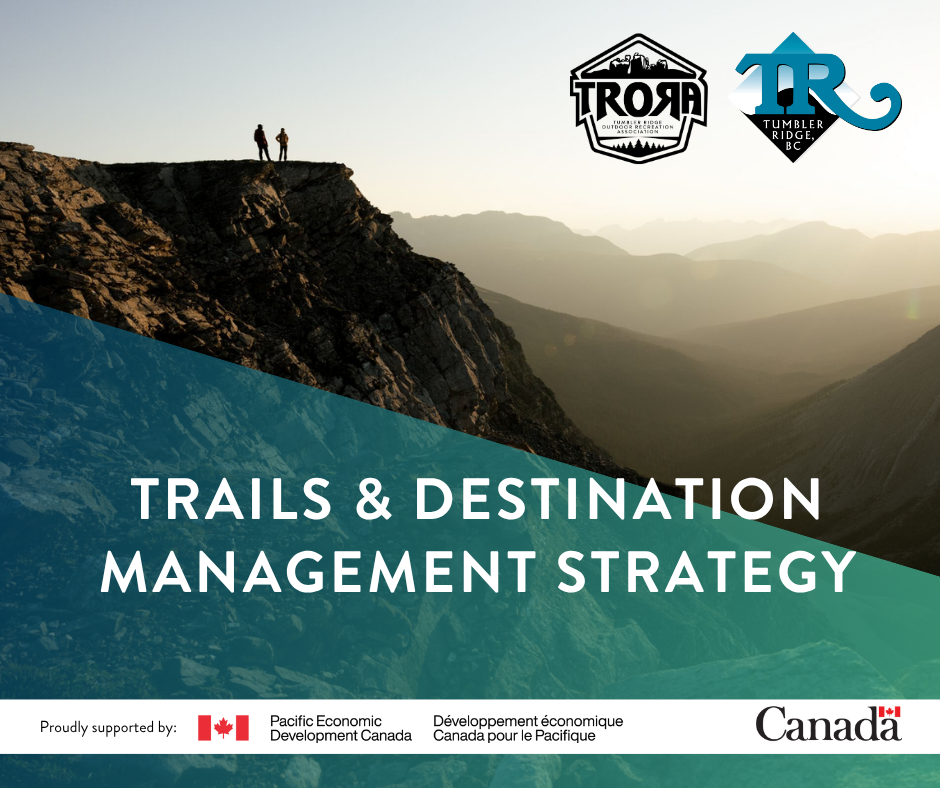
The District of Tumbler Ridge’s Trails and Outdoor Recreation Strategy is complete and was adopted by Mayor and Council in August 2026.
The Strategy will guide future trail planning, management, and investment, supporting sustainable outdoor recreation and tourism opportunities for residents and visitors. Explore its key goals below or read the full Strategy and supporting appendices.
About the Strategy
The Tumbler Ridge Trails and Outdoor Recreation Strategy provides a roadmap for the sustainable development, management, and promotion of our trails and outdoor recreation opportunities.
Developed by Selkirk Planning & Design in collaboration with the District of Tumbler Ridge, the Tumbler Ridge Outdoor Recreation Association (TRORA), and the broader community, the Strategy aims to strengthen Tumbler Ridge’s position as a four-season outdoor recreation destination. It balances recreation and tourism growth with environmental conservation, community well-being, and long-term economic benefits.
Strategy at a Glance
The Strategy identifies seven key goals to guide the future of trails and outdoor recreation in Tumbler Ridge:
- Strengthen TRORA and organizational capacity: Support TRORA’s role in coordinating trail groups, sharing resources, and building long-term capacity.
- Formalize trails and secure sustainable funding: Establish the authorizations and agreements needed for responsible trail management and access to funding.
- Expand and improve trails and facilities: Enhance trail connections and supporting infrastructure, including trailheads, parking, washrooms, shelters, and boat launches.
- Support sustainable trail management: Establish consistent practices for maintenance, signage, environmental stewardship, and long-term infrastructure planning.
- Improve trail information and mapping: Create a reliable source for trail information, conditions, closures, permits, and safety guidance.
- Enhance visitor and tourism experiences: Develop distinctive trail experiences, events, and year-round recreation opportunities.
- Strengthen collaboration and regional partnerships: Build coordination among trail groups, the District, First Nations, provincial government, industry, and neighbouring communities.
Read the Documents
- Read the Strategy - Trails and Outdoor Recreation Strategy
- View the Appendices - Trails and Outdoor Recreation Strategy Appendices
What Happens Next?
With the Strategy adopted, the next step is to turn its recommendations into action. The implementation plan identifies 129 prioritized actions across seven goals, providing a framework for improvements over time.
Early priorities focus on strengthening TRORA’s capacity to coordinate trail groups, pursuing sustainable funding, and securing the authorizations and agreements needed for responsible trail management. These foundations will support future investment in trails and facilities, improved mapping and information, and enhanced recreation experiences.
Implementation will require collaboration among the District, TRORA, local trail groups, First Nations, provincial agencies, and regional partners. Actions will be advanced in stages, guided by their priority, available funding, organizational capacity, and required approvals.
The Strategy recommends annual progress reporting to track completed actions, funding, trail use, and other measures of success. It also calls for a mid-point review in 2029 and a full refresh in 2031 to respond to changing needs and opportunities.
Questions?
Email us at: trailstrategy@dtr.ca
Call Town Hall at (250) 242-4242